

Join our newsletter to receive every MSR update!
As of May 15, the average 30 Year primary fixed mortgage rate increased by six basis points from April 30, 2026, and was lower than the prior month by about 10 basis points. This trended volatility is a significant sign that reflects inflation persistence, geopolitical instability, and rising Treasury yields. Many economists and lenders, including Fannie Mae, have revised their rate forecasts higher for the remainder of 2026.
The financial markets reassessment of the Federal Reserve easing expectations has evaporated. Many economists had projected several rate cuts during 2026, but during the first two weeks of May, that consensus had shifted toward a slower and more limited easing cycle, and possible rate hikes in late 2026 or early 2027. April’s inflation reports indicate elevated figures compared to the year prior and stronger than expected CPI and PPI data. At the same time, geopolitical tensions and rising oil prices pushed Treasury yields sharply higher. The 10 Year Treasury yield rose toward 4.50%, causing mortgage rates to rebound to around 6.50%. Some analysts are warning that renewed or prolonged geopolitical disruptions could push rates back toward 7.00%.
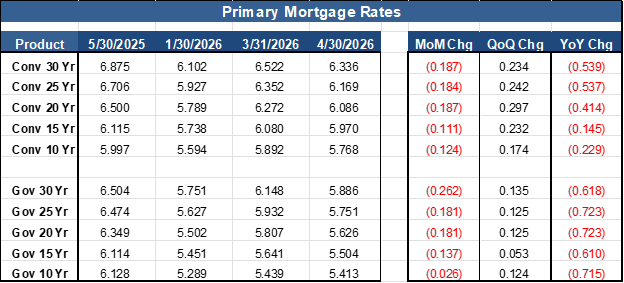
During April, MCT’s Base Mortgage Rate decreased from 6.52% to 6.34% at the end of April, representing 18 basis points decline since March 31, 2026.
Mortgage rates continue to be the dominant driver of housing demand during April and early May. The housing market has become extremely sensitive to even small rate movements, with buyer demand and refinance activity improving when mortgage rates move below 6.25% and slowing materially when rates move to 6.50% and higher.
Home prices remained relatively stable during April, which is supported by limited inventory levels. Builders continue to rely on incentives and price reductions to increase demand. Existing home sellers are increasingly willing to negotiate concessions and price reductions.
MSR fair values remained stable during April with slight declines from March highs. MCT expects MSR values to decline by less than three (3) basis points from March mark. However, MSR values could remain volatile in the short term due to geopolitical and economic uncertainties.
New Production and Value Trends:
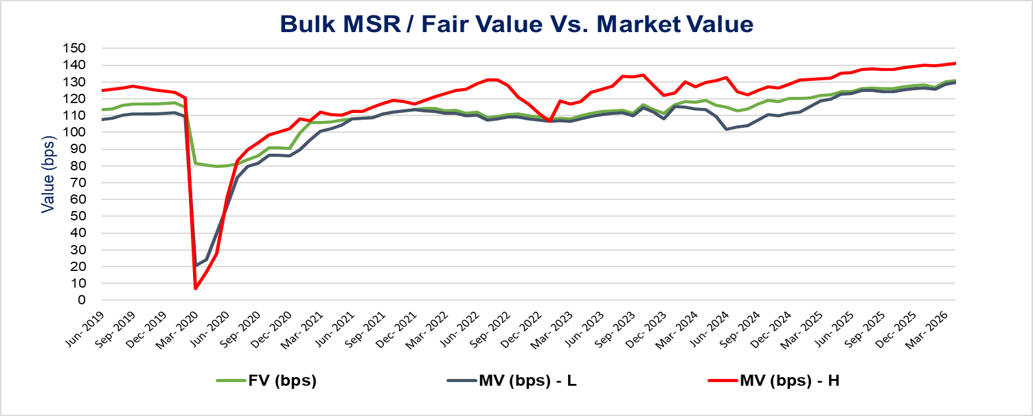
Mortgage refinance activity remained volatile and sensitive to the slightest mortgage rate movements. After a sharp rise in refinancing activities during Q1, 2026, buoyed by lower interest rates, mortgage refinancing activity weakened again as rates rebounded higher by late March and early April. According to the Mortgage Bankers Association (MBA), refinance applications during parts of April and May were generally 28%-52% higher than the same periods a year earlier.
Cash-out refinance and home equity lending activity remained resilient compared to traditional rate and term refinancing because many homeowners continued to hold first mortgages with rates that are significantly below prevailing market levels.
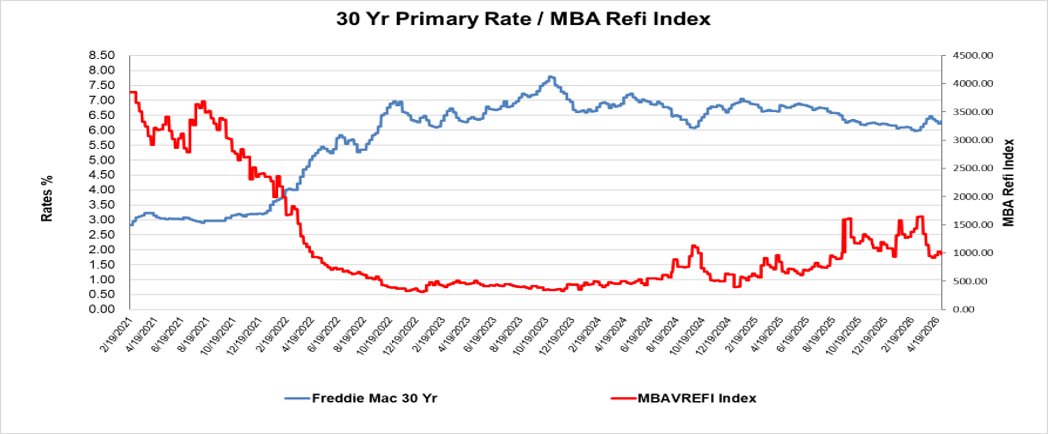
Current servicing released premiums (SRP) remain strong as major aggregators continue to offer record SRP prices, including FHA production. We anticipate those levels to remain elevated during Q2, 2026.
The current average SRP levels have increased by another 1-3 basis points from March, and MSR fair value levels have improved during April leading to a slight tightening of the spread between fair value and SRP. The current spread between fair value and SRP is about 13-20 basis points. We continue to advocate for caution when capitalizing new MSR production at moderate price levels as current SRP levels reflect the aggregator’s economies of scale rather than actual fair value.
Bulk MSR Market
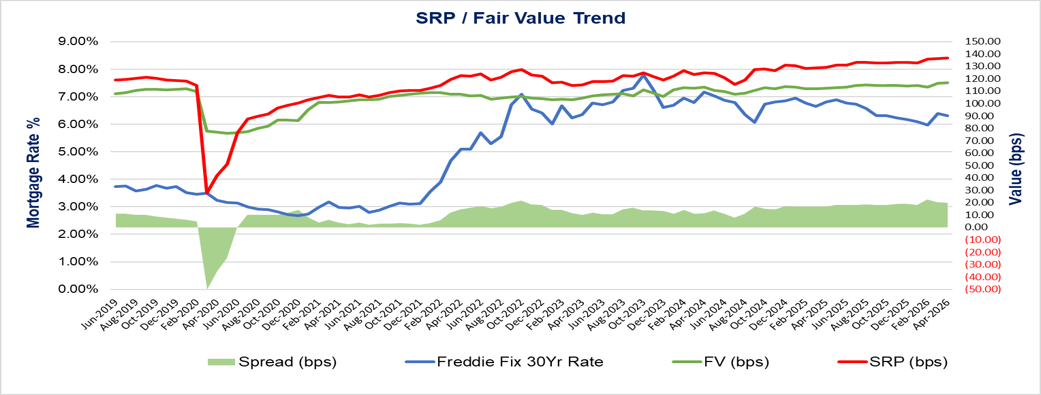
Bulk MSR trade activities remained strong during the month of March and have been active since the start of the year. MCT’s recent bulk MSR offerings generated attractive prices that were above 5.0X of servicing fees. MCT anticipates an increase in bulk MSR activities as MSR buyers continue their aggressive pricing levels while loan origination levels remain tight.
MSR buyers remain bullish about the strength of the MSR market and intend to acquire more MSRs as they become available. The MSR market continues to experience some consolidation, which is likely to increase during the remainder of 2026 as the mortgage lending market navigates economic and global uncertainties that could have an impact on the economy. MSRs continue to offer attractive yields and income for servicers, especially when loan originations volume remains low.
Bulk MSR portfolios continue to trade at servicing fees multiples between 5.00X and 5.50X. Government MSRs with no delinquencies and with interest rates below 5.00% continue to trade at around 4.00X. Newer conventional loan vintages from 2024 and 2025 are trading between 4.00X and 4.50X multiples of servicing fees.
Non-QM and Second Mortgages Trends
Non-QM refinance activity remained selective, with investors and DSCR borrowers continuing to refinance when rental cash-flow economics justified it. Borrowers are selective and are less sensitive to mortgage rate changes and are more driven by mortgage credit structure flexibility and income documentation alternatives. Overall, origination volume remained constrained by elevated mortgage rates during April and May, but demand remained steady.
Non-QM delinquencies remained manageable, though investors continued to closely monitor liquidity sensitive borrowers and adjustable-rate loan exposure. The average delinquency levels within the Non-QM space remain elevated at below 10%, but steadily and slowly rising prepayments continue to increase within portfolios. MCT’s data shows that recent prepayment levels have crossed into the double-digit zone during the second half of 2025 and through April 2026.
MCT anticipates that Non-QM loan values will remain steady and potentially rise over the course of the year.
The second lien mortgage and HELOC markets were more active as more borrowers opted to choose a second mortgage or HELOC rather than refinancing their low rate first mortgage. HELOC balances continued to grow slowly but unevenly, with most activity concentrated among borrowers seeking debt consolidation or short-term cash needs rather than discretionary borrowing.
The overall HELOC and second lien lending activity reflected a stable demand from high credit worthy borrowers and subdued demand from lower credit profile borrowers facing affordability pressure.
The bulk MSR market for these two segments remains virtually nonexistent. Underlying fair values for Non-QM MSR products remain between 3.50 – 4.25 multiples of servicing fees while second mortgages and HELOC MSR products fair values are between 2.25x and 3.25x multiples of servicing fees.
Did you know MCT offers non-qm portfolio valuations? Contact the MSR team today to learn more or schedule a consultation.
Mortgage Rates
As of April 30, 2026, the current fixed 30 Year mortgage rate is 6.3358%, which represents 18.66 basis points decline from March 31, 2026, mark.
Escrows and Float Income
Mortgage escrow values have risen from March 31, 2026, mark due to a 7.60 basis points increase in the float income rate. Escrow float income value is the second largest contributor to the overall MSR value.
Rates Indices
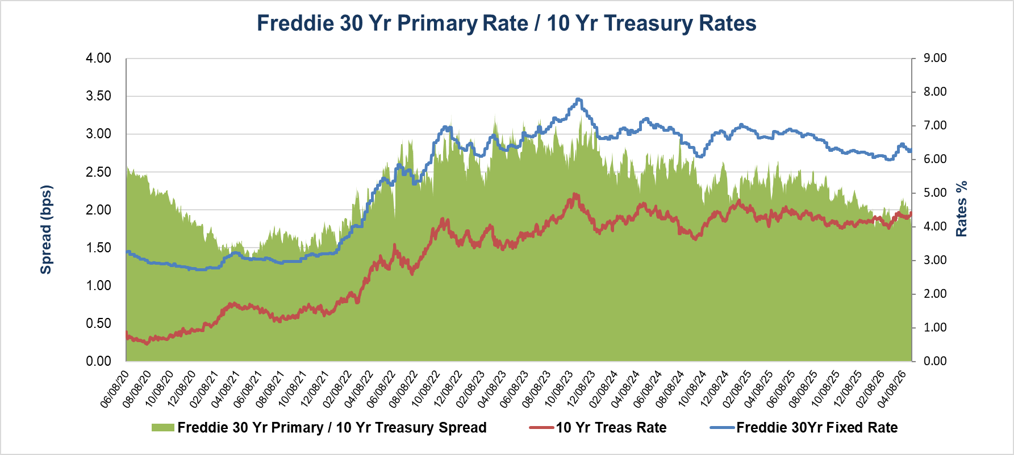
Mortgage rates have decreased from March 31, 2026, marks. MCT’s Primary 30 Year mortgage rate decreased by 18.66 basis points to 6.3358%.
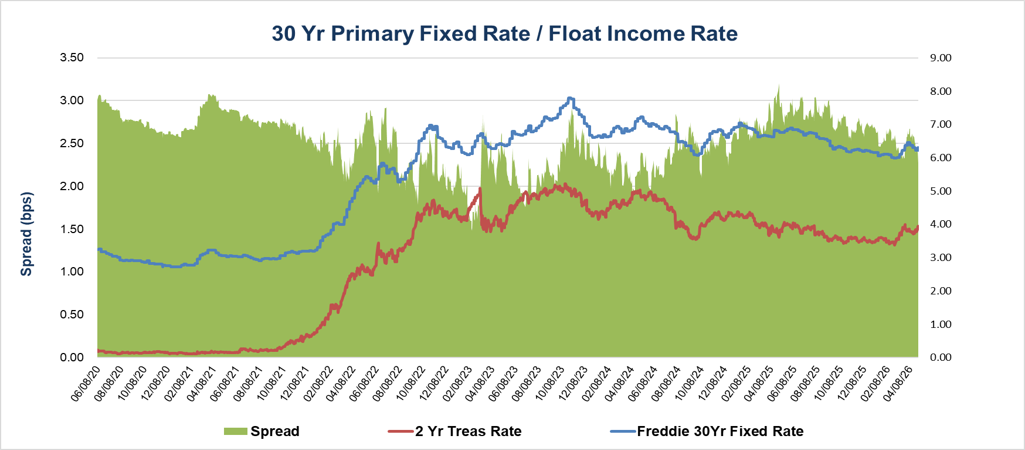
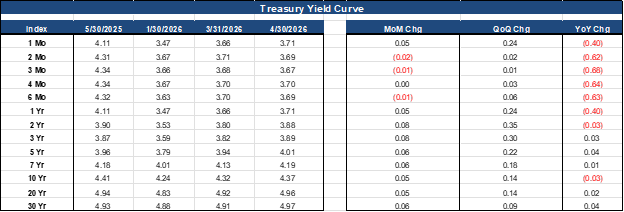
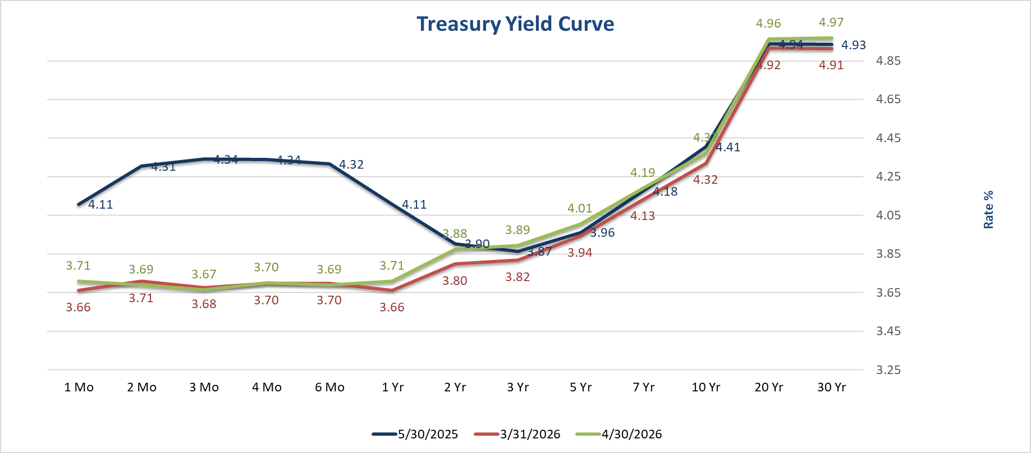
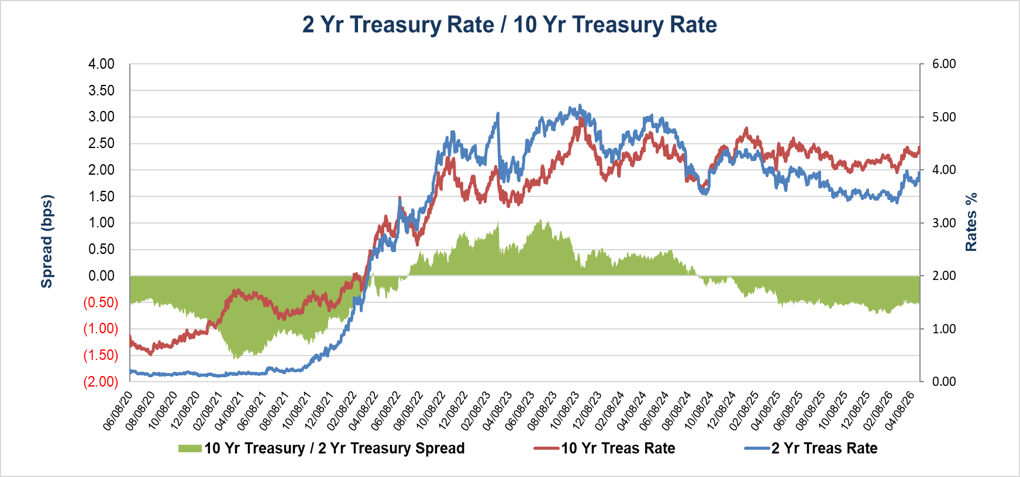
As of April 30, 2026, the yield on the benchmark 10 Yr Treasury is at 4.374%, representing a 5.30 basis points increase from the prior month. The current yield curve remains steep, due to inflation and economic concerns, plus the geopolitical risks.
Fair Value Guidance
Our April 30, 2026, fair values guidance for existing portfolios should reflect a slight decrease in value from their March 31, 2026, marks due to lower mortgage rates. We anticipate that portfolios with an average interest rate above 6.0% will experience higher decline in values ranging between 1-3 basis points while portfolios with an average interest rate below 6.0% will experience a narrower decrease in values between 1-2 basis points.
MSR holders should expect a maximum change in values ranging between -1 and -3 basis points.
For portfolios that have a mix of Conventional and Government loans, we anticipate Fair Value changes as follows:
- Conventional loans between -1 to -2 bps change from March 31, 2026,
- Government loans between -1 to -4 bps change from March 31, 2026,
If you have any questions or would like to schedule a call with our MSR team, please contact us today.
About MCT:
For over two decades, MCT has been a leading source of innovation for the mortgage secondary market. Melding deep subject matter expertise with a passion for emerging technologies and clients, MCT is the de facto leader in innovative mortgage capital markets technology. From architecting modern best execution loan sales to launching the most successful and advanced marketplace for mortgage-related assets, lenders, investors, and network partners all benefit from MCT’s stewardship. MCT’s technology and know-how continues to revolutionize how mortgage assets are priced, locked, protected, valued, and exchanged – offering clients the tools to thrive under any market condition. For more information, visit https://mct-trading.com/ or call (619) 543-5111.
Media Contact:
Ian Miller
Chief Marketing Officer
Mortgage Capital Trading
619-618-7855
pr@mctrade.net