

Join our newsletter to receive every MSR update!
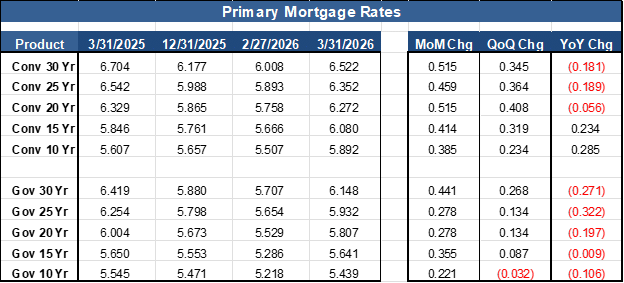
As of March 31, the average 30-year primary fixed mortgage rate was just above 6.50%, higher than the prior month by about 50 basis points. A significant increase that was largely driven by swings in Treasury yields, persistent inflation uncertainty, and renewed geopolitical tensions that pushed oil prices and inflation expectations higher. The Federal Reserve maintained a steady policy stance.
During March, MCT’s Base Mortgage Rate increased from 6.01% to 6.52% at the end of March, representing a 51 basis points increase since February 28, 2026.
Economic and geopolitical uncertainties continue to add inflationary pressure on the broader economy. February PCE data pointed to “sticky” inflation even prior to the geopolitical tinderbox and outbreak of war. The war’s impact was evident in the March CPI data, which showed a tripling of monthly inflation to 0.9% and a nearly full percentage point increase in the annual inflation rate to 3.3%. Core measures remained broadly unchanged with the market consensus that price spillover into the broader economy has not yest materialized.
Housing market conditions continued to reflect affordability pressure, high home prices along with elevated borrowing costs limiting buyers from entering the market and keeping the overall demand subdued compared to prior years. Overall mortgage production was almost brought to a screeching halt due to the rapid and sharp increase in mortgage rates experienced throughout March.
Refinance activity saw some improvement during the first two months of 2026 but slowed down sharply in March due to higher interest rates. Much of the refinance activity was concentrated in loan vintages between 2022 and 2025. Looking forward, market expectations point to continued mortgage rates between 6.0% and 6.6%, with the potential for gradual easing towards the latter part of 2026 if geopolitical and inflation pressures moderate.
MSR fair values have rebounded sharply from February’s lows due to the sharp increase in mortgage rates and rate indices. MCT expects MSR values to increase by about 3-9 basis points from their February mark. However, MSR values could remain volatile in the short term due to the ongoing geopolitical and economic uncertainties.
New Production and Value Trends:
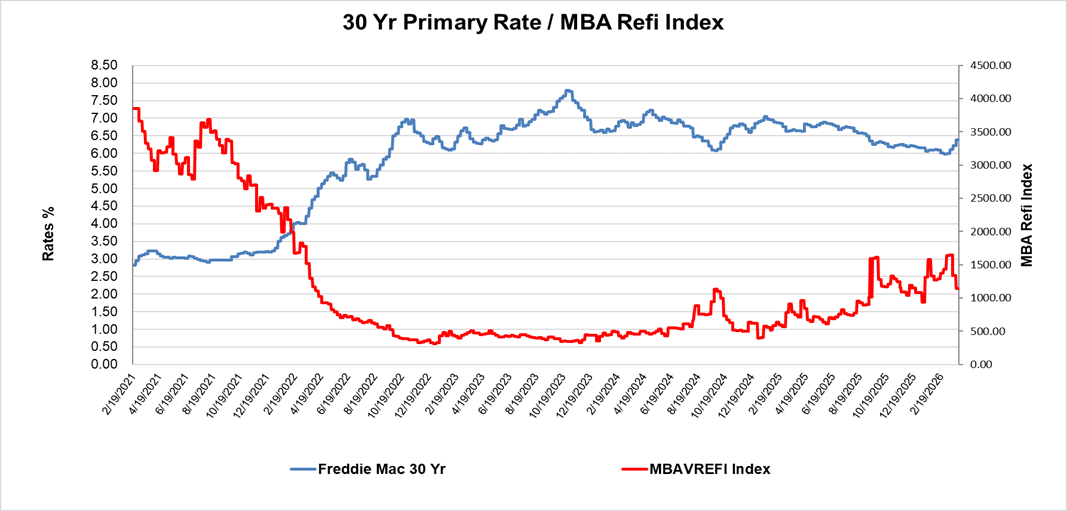
After a sharp rise in refinancing activities earlier in the year buoyed by lower interest rates, it reversed sharply with the trajectory of mortgage rates since March 1st.
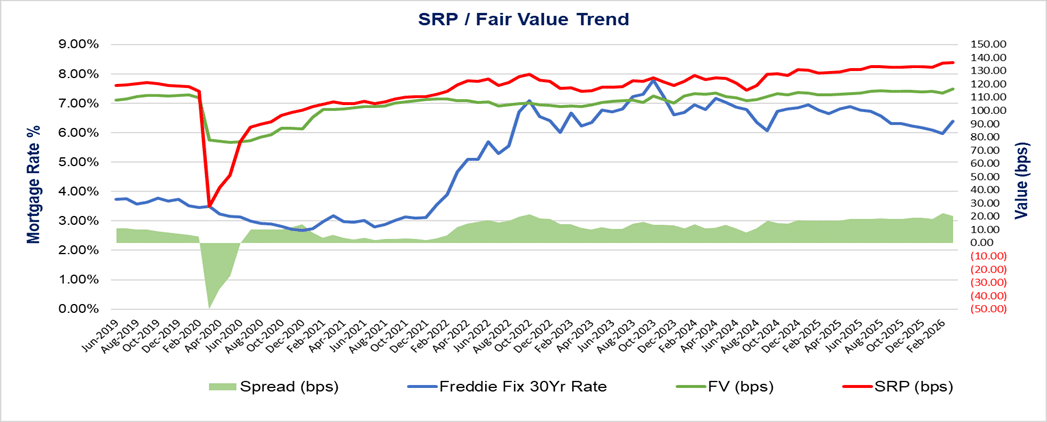
Current servicing released premiums (SRP) remain strong as major aggregators continue to offer record SRP prices, including FHA production. We anticipate those levels to remain elevated in Q2, 2026.
The current average SRP levels have increased by another 2-3 basis points from February levels leading to a slight widening of the spread between fair value and SRP. The current spread between fair value and SRP is about 16-22 basis points. We continue to advocate for caution when capitalizing new MSR production at moderate price levels as current SRP levels reflect the aggregator’s economies of scale rather than actual fair value.
Bulk MSR Market
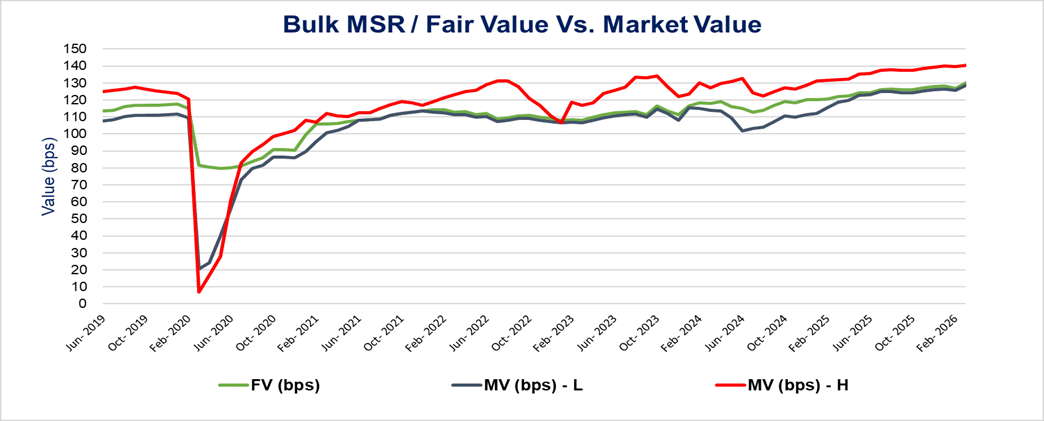
Bulk MSR trade activities remained strong during the month of March and has been active since the start of the year. MCT’s recent bulk MSR offerings generated attractive prices that were above 5.0X of servicing fees. MCT anticipates an increase in bulk MSR activities as MSR buyers continue their aggressive pricing levels while loan origination levels remain low.
MSR buyers remain bullish about the strength of the MSR market and intend to acquire more MSRs as they become available. The MSR market continues to experience some consolidation which is likely to increase during remainder of 2026 as the mortgage lending market navigates economic and global uncertainties that could have impact on economy. MSRs continue to offer attractive yields and income for servicers, especially critical when loan originations volume is low.
Bulk MSR portfolios continue to trade generally at servicing fees multiples between 5.00X and 5.50X. Government MSRs with no delinquencies and with interest rates below 5.00% continue to trade at around 4.00X. Newer conventional loan vintages from 2024 and 2025 are trading at between 4.00X and 4.50X multiples of servicing fees.
Non-QM and Second Mortgages Trends
Non-QM loan mortgage market remained relatively resilient compared to the conforming market, supported by borrowers who are less sensitive to headline mortgage rates and generally driven by mortgage credit structure flexibility and income documentation alternatives. Overall origination volume remained constrained by elevated mortgage rates during March, but demand remained steady.
Credit spreads in Non-QM execution remain moderately wide due to investor caution and ongoing economic uncertainty while liquidity remained stable and securitization markets continued to function without significant disruption.
The rise in Non-QM production, loan performance, and money flow is also generating more scrutiny from regulators and news headlines. This niche segment should anticipate broader scrutiny as the Non-QM market share of the overall mortgage market increases.
Non-QM delinquencies and prepayments continue to rise within portfolios. MCT’s data show that recent prepayment levels have crossed into double digit zone starting during the second half of 2025 and through March 2026. Delinquency rates continue their slow ascent but are currently at manageable levels. Non-QM delinquencies remain higher than agency portfolios.
MCT anticipates that No-QM loan values to remain steady but could potentially rise over the course of the year.
The second lien and HELOC markets were more rate sensitive during March, as rising and volatile mortgage rates impacted homeowner incentive to tap into their home equity.
HELOC balances continued to grow slowly but unevenly, with most activity concentrated among borrowers seeking debt consolidation or short-term cash needs rather than discretionary borrowing.
Many homeowners remain reluctant to refinance their existing 1st mortgage due to the low rates and are selectively using second liens instead. Credit standards remained tight, with lenders favoring strong Credit profiles and lower combined loan to value exposures.
The overall HELOC and second lien lending activity reflected a stable demand from high credit worthy borrowers and subdued demand from lower credit profile borrowers facing affordability challenges.
The bulk MSR market for these two segments remains virtually nonexistent. Underlying fair values for Non-QM MSR products remain between 3.50 – 4.25 multiples of servicing fees while Second Mortgages and HELOC MSR products fair values are between 2.25x and 3.25x multiples of servicing fees.
Did you know MCT offers non-qm portfolio valuations? Contact the MSR team today to learn more or schedule a consultation.
Mortgage Rates
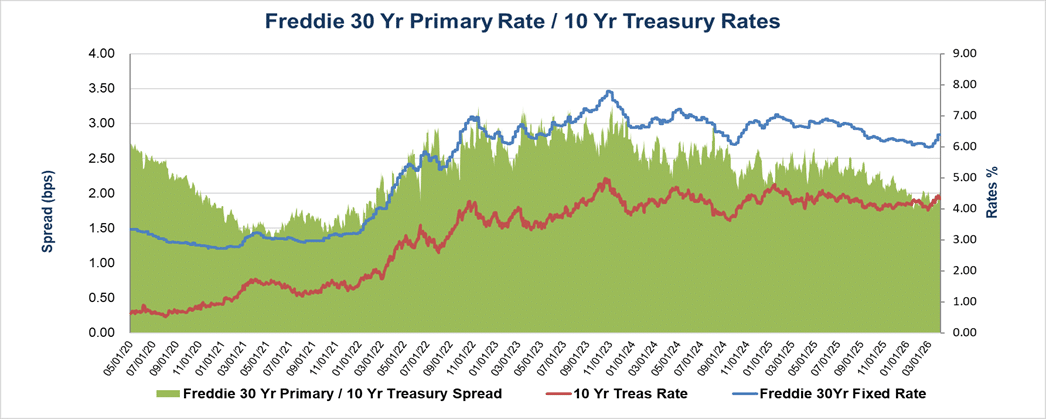
As of March 31, 2026, the current fixed 30 Year mortgage rate is 6.5224%, which represents a 51.45 basis points rise from February 28, 2026, mark.
Escrows and Float Income
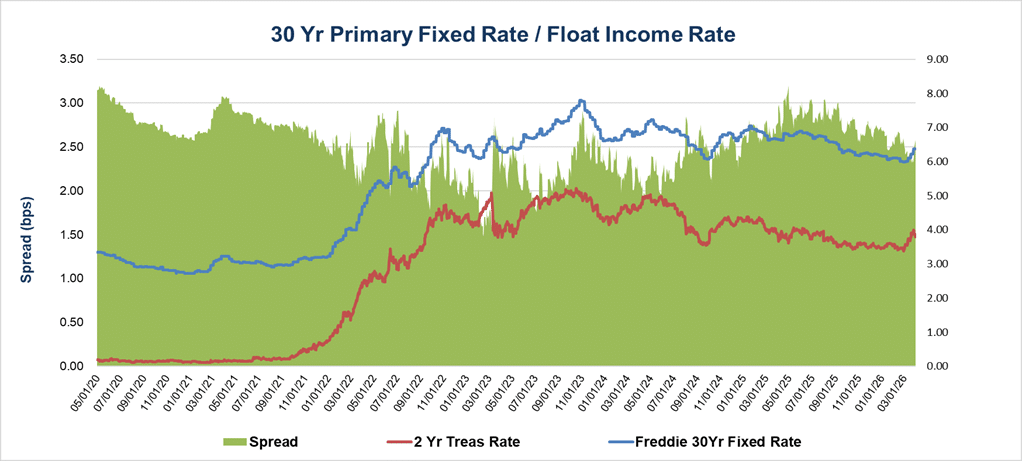
Mortgage escrow values have risen from February 28, 2026, mark due to 41.80 basis points increase in the float income rate. Note: Escrow float income value is the second largest contributor to the overall MSR value.
Rates Indices
Mortgage rates have risen sharply from February 28, 2026, marks. MCT’s Primary 30 Year mortgage rate increased by 51.45 basis points to 6.5224%.
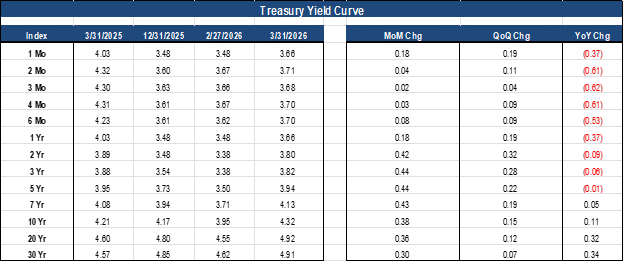
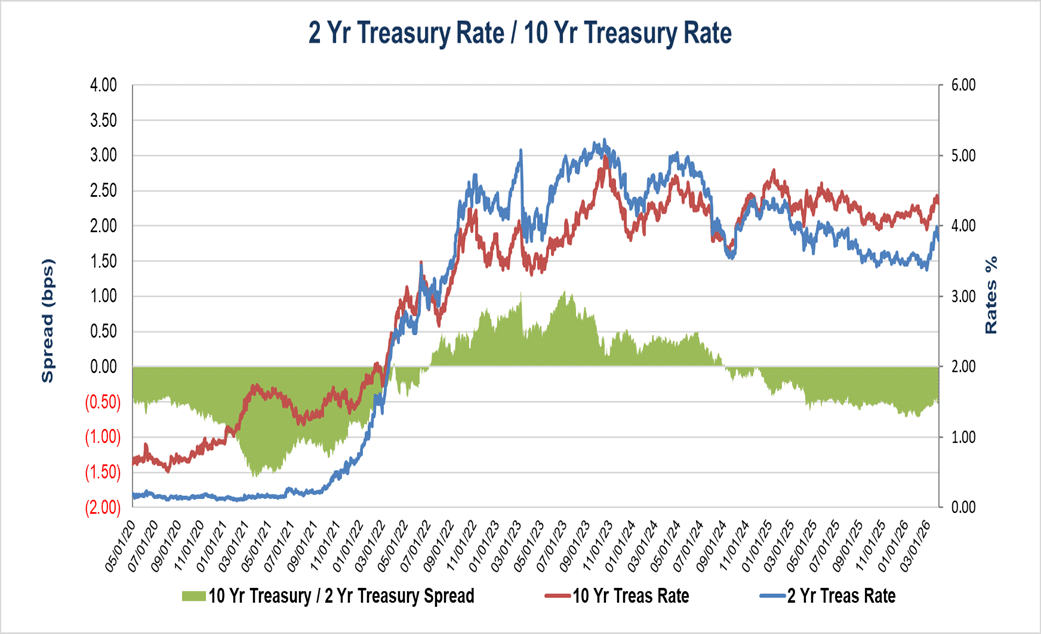
The current Treasury Yield Curve continues to reflect some economic distress and economic uncertainties.
As of March 31, 2026, the yield on the benchmark 10-year Treasury is at 4.32%, representing a 38 basis points increase from the prior month. The current yield curve remains steep, due to global political and economic uncertainties.
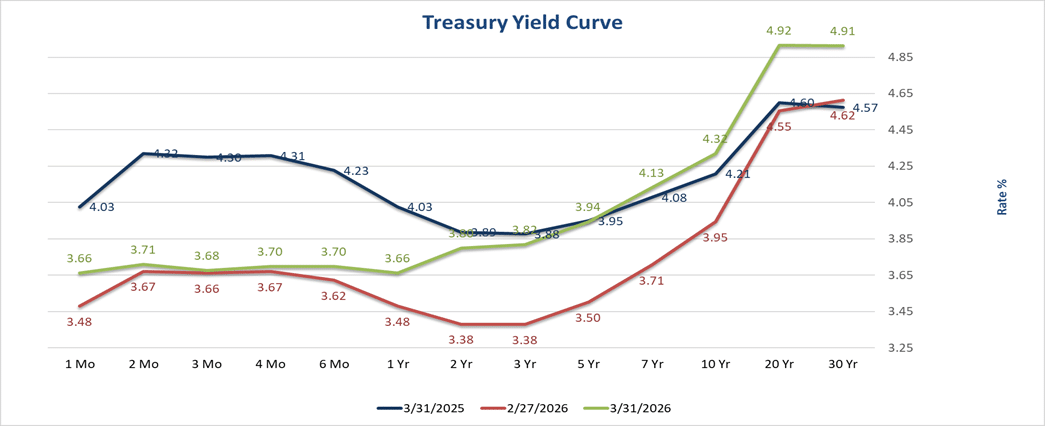
The current spread between the 2 Yr Treasury rate and the 10 Yr Treasury rate is on a trajectory that signals the potential for more economic challenges ahead. The current spread has tightened by 5 basis points since February 28,2026.
Fair Value Guidance
Our March 31, 2026, fair values guidance for existing portfolios should reflect sharp increases from their February 28, 2026, marks due to higher mortgage rates and float income rates. We anticipate that portfolios with an average interest rate above 6.0% will experience higher values ranging between 3-9 basis points while portfolios with an average interest rate below 6.0% will experience higher values between 3-5 basis points.
MSR holders should expect a maximum change in values ranging between +3 and +9 basis points.
For portfolios that have a mix of Conventional and Government loans, we anticipate Fair Value changes as follows:
- Conventional loans between +3 to +9 bps change from February 28, 2026, marks.
- Government loans between +4 to +12 bps change from February 28, 2026, marks.
If you have any questions or would like to schedule a call with our MSR team, please contact us today.
About MCT:
For over two decades, MCT has been a leading source of innovation for the mortgage secondary market. Melding deep subject matter expertise with a passion for emerging technologies and clients, MCT is the de facto leader in innovative mortgage capital markets technology. From architecting modern best execution loan sales to launching the most successful and advanced marketplace for mortgage-related assets, lenders, investors, and network partners all benefit from MCT’s stewardship. MCT’s technology and know-how continues to revolutionize how mortgage assets are priced, locked, protected, valued, and exchanged – offering clients the tools to thrive under any market condition. For more information, visit https://mct-trading.com/ or call (619) 543-5111.
Media Contact:
Ian Miller
Chief Marketing Officer
Mortgage Capital Trading
619-618-7855
pr@mctrade.net