

Join our newsletter to receive every MSR update!
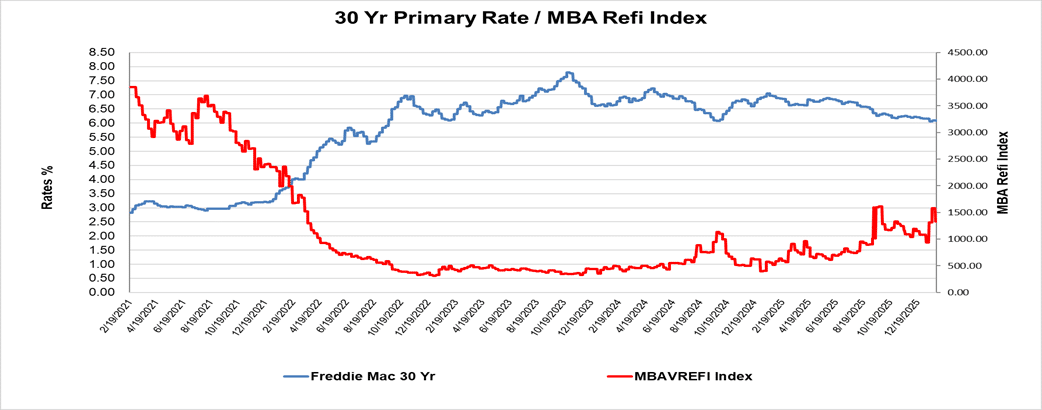
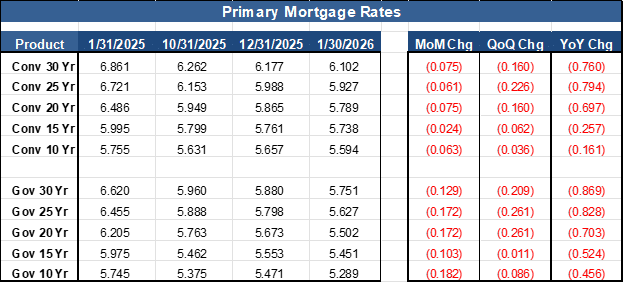
The average 30-year primary mortgage rate is currently at slightly above 6%. Just one year ago, the rate averaged about 6.86%. Mortgage rates appear to be holding steady since the start of 2026 as economists and investors wait for more news.
Mortgage rates have been trending lower for months, helping drive a slight pickup in refinance activity since early Q4, 2025. The housing market remains in a hibernation mode, dating back to 2022. Housing inventory remains constrained and low, however, there is hope that the 2026 spring homebuying season will start the much-anticipated mortgage lending rebound as mortgage rates are about 76 basis points lower than a year ago.
Still, mortgage rates remain high for many buyers, but those who remain in the market are being rewarded with the biggest discounts in years. According to Redfin, about 62% of home buyers last year paid less than the listing price, the highest share since 2019. However, it’s a buyer’s market for people who can afford it.
Another challenge the housing market is facing is that homeowners are staying put much longer and driving tight inventory levels, largely due to their low mortgage rates. The housing market remains constrained due to owners that are reluctant to move and give up their low-interest rate mortgages.
Industry data at the end of 2025 and going back to 2000 shows that homeowners owned their homes for an average of 8.6 years versus only 4.2 years average back in 2000. Homeowner tenure has increased steadily in almost every metro area over the past two decades, according to ATTOM, an industry data provider.
MCT’s Base Mortgage Rate declined from 6.18% to 6.10% at the end of January, representing a seven and a half (7.5) basis points decline since December 31, 2025, and 76 basis points since January 31, 2025. The Mortgage Bankers Association and Fannie Mae continue to project that rates will drop below 6.00% by the end of 2026.
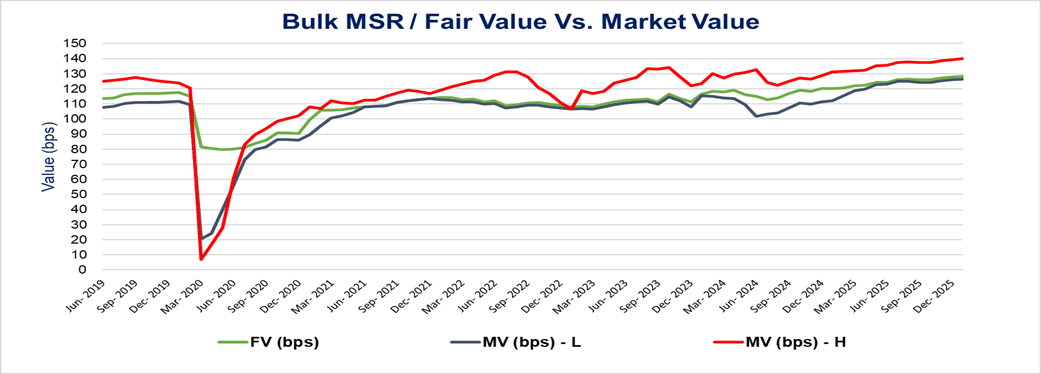
MSR fair values have remained robust and show little impact from current mortgage and float income rate volatility. Aggregators have kept MSR market values elevated since the start of 2026. The mortgage industry has experienced some consolidations during the second half of 2025 and we should anticipate that trend to continue throughout 2026.
New Production and Value Trends:
Refinancing activity levels continue their slow but upward trend as mortgage rates remain just above 6.0%.
MCT’s data shows a slight reversal in prepayments after small slowdown in December, 2025.
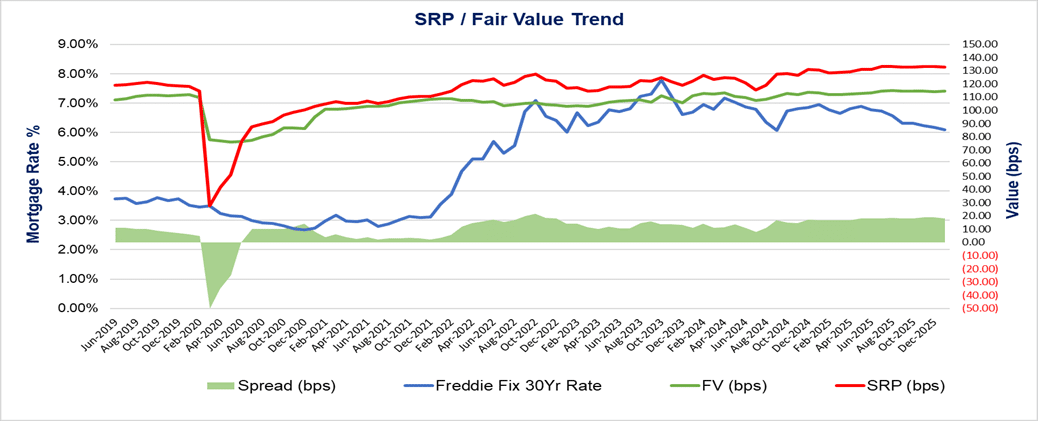
Current servicing released premiums (SRP) remain relatively strong as major aggregators continue to offer record SRP prices, including FHA production. We anticipate those levels to remain elevated during Q1, 2026.
The current average SRP levels remain at about 10-15 basis points higher than the average fair value. We continue to advocate for caution when capitalizing new MSR production at moderate price levels as current SRP levels reflect the aggregator’s economies of scale rather than actual fair value.
Bulk MSR Market
Though inquiries about bulk MSR trades have increased since November of last year, January had fewer trades than a year ago. However, we anticipate an increase in bulk MSR activity as buyers become more aggressive in their pricing levels while loan origination levels remain tight.
MSR buyers continue to be bullish about the strength of the MSR market and their appetite to purchase more MSRs as they become available. The MSR market could experience further transactions and possible mergers during the first half of 2026 to cash in on some of the strong MSR values and mitigate against possible economic uncertainties. MSRs continue to offer attractive yields and income for servicers, especially when loan originations volume remains low.
One notable transaction that took place a week ago is when PennyMac Financial Services Inc. announced that it is acquiring Cenlar Capital Corporations’ $740 billion in mortgage subservicing rights and 2 million loans. The deal brings PennyMac’s servicing portfolio to above $1 trillion in UPB. According to Housingwire, the transaction makes PennyMac the second largest mortgage servicer in the U.S.
Bulk MSR portfolios continue to trade at servicing fees multiples between 5.00X and 5.50X. Government MSRs with low delinquencies and with interest rates below 5.00% continue to trade at 4.00X or higher. Newer conventional loan vintages from 2024 and 2025 are trading at between 4.00X and 4.50X multiples of servicing fees.
Non-QM and Second Mortgages Trends
Non-QM loan production rebounded in January 2026 as lenders loosened standards and positioned themselves for the 2026 homebuying season. According to the National Mortgage News, the latest Mortgage Credit Availability Index (MCAI) reflected an increase, signaling a loosening of lending standards as the 2026 housing market begins. The MCAI, which tracks the ease of obtaining mortgage credit increased in January with broader loan program offerings.
As we start the year, a closer look into non-qm servicing performance is warranted as delinquencies and prepayments continue to rise within portfolios. MCT’s data show that recent prepayment levels crossed into the double-digit zone during the second half of 2025. Delinquency rates, though steadily and slowly rising, are slightly above Agency delinquency levels, and lower than Ginnie Mae portfolio delinquency rates.
Non-QM production margins have tightened in recent months as well leading to further scrutiny over pricing levels. Demand for non-qm products remain very strong and prices have tightened as buyers are becoming more confident in this product and its overall performance. As non-qm product liquidity rises during 2026, we anticipate their MSR values will rise steadily over the course of the year.
Home equity remains substantial at approximately $35 trillion as originator’s experience growing pressure on margins; As the industry starts 2026, Second mortgage and HELOC lenders are more focused on pricing levels to mitigate risk and ensure continuous profitability. HELOC loan rates remain above 8% while the average Home Equity loan rate sits right at 8%.
HELOCs and closed end second mortgage products remain a strong and viable option for many borrowers who have first mortgage loans with interest rates below 5% and home equity above $100K.
The bulk MSR market for these two segments remains virtually nonexistent. Underlying fair values for non-qm MSR products remain between 3.65 – 4.25 multiple of servicing fees while Second Mortgages and HELOC MSR products fair values are between 2.30x and 3.25x multiples of servicing fees.
Did you know MCT offers non-qm portfolio valuations? Contact the MSR team today to learn more or schedule a consultation.
Mortgage Rates
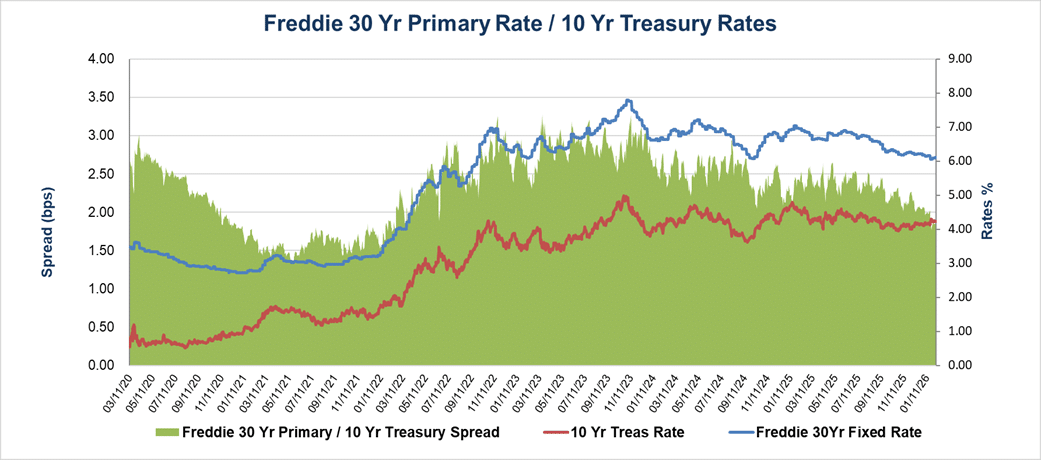
As of January 31, 2026, the current fixed 30 Year mortgage rate is 6.102%, which represents about seven and a half (7.5) basis points decline from their December 31, 2025 mark.
Escrows and Float Income
Mortgage escrow values increased slightly from their December 31, 2025 mark due to five (5) basis points increase in the float income rate. Note: The escrow float income value is the second largest contributor to the overall MSR value.
Rates Indices
Mortgage rates have edged slightly lower from their December 31, 2025 marks. MCT’s Primary 30 Year mortgage rate declined by seven and a half (7.5) basis points to 6.102%.
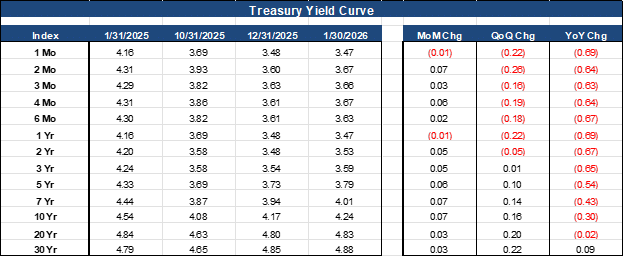
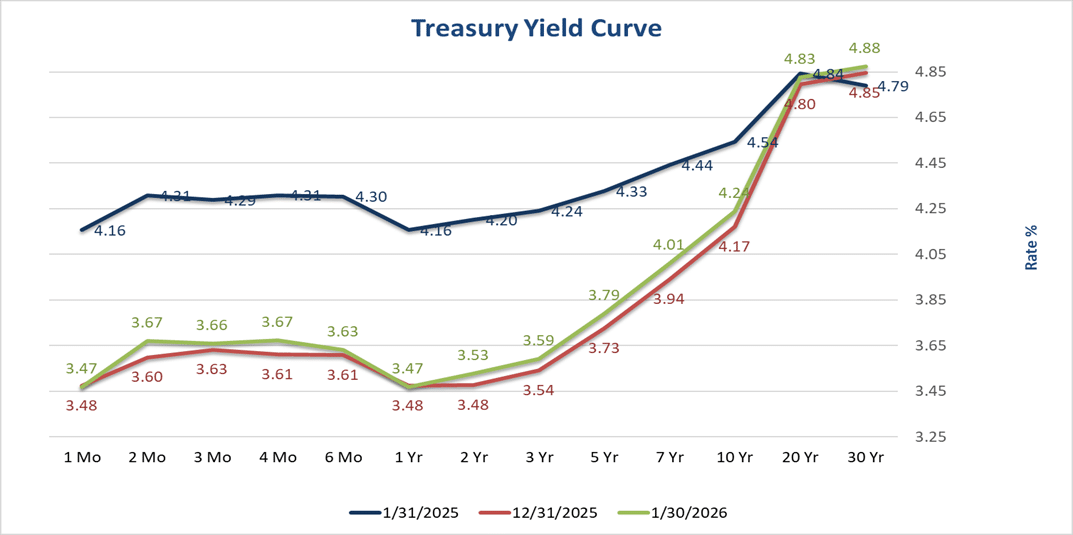
The current Treasury Yield Curve continues to reflect some economic distress and economic uncertainties.
The yield on the benchmark 10-year Treasury is at 4.24%, seven (7) basis points higher than the prior month. The current yield curve remains steep reflecting investors’ continued demand for higher yields due to the current economic uncertainty.
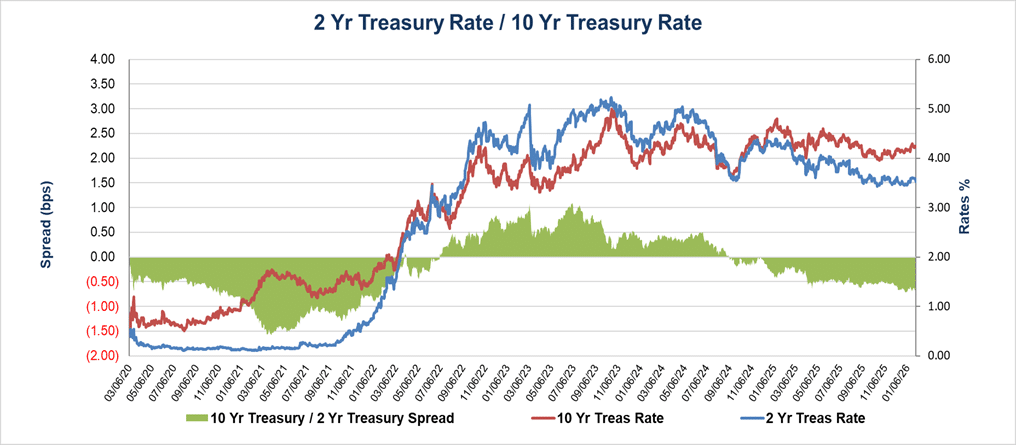
The current spread between the 2 Yr Treasury rate and the 10 Yr Treasury rate is on a trajectory that signals the potential for more economic challenges ahead. The current spread has widened by two (2) basis points since December 31,2025.
Fair Value Guidance
Our January 31, 2026, “fair value” guidance for existing portfolios should remain relatively unchanged or slightly decrease from their December 31, 2025, marks. Mortgage rates have retreated by an average of about seven and one half (7.5) basis points, and the float income rate has increased by five (5) basis points since December 31, 2025; Therefore, we anticipate that portfolios with an average interest rate above 6.0% will experience some decline in fair values while portfolios with an average interest rates below 6.0% will experience a potential increase in fair values.
MSR holders should expect a maximum change in values ranging between -2 and +2 basis points.
For portfolios that have a mix of Conventional and Government loans, we anticipate Fair Value changes as follows:
- Conventional loans between -1 to 1 bps change from December 31, 2025, marks.
- Government loans between -2 to 2 bps change from December 31, 2025, marks.
If you have any questions or would like to schedule a call with our MSR team, please contact us today.
About MCT:
For over two decades, MCT has been a leading source of innovation for the mortgage secondary market. Melding deep subject matter expertise with a passion for emerging technologies and clients, MCT is the de facto leader in innovative mortgage capital markets technology. From architecting modern best execution loan sales to launching the most successful and advanced marketplace for mortgage-related assets, lenders, investors, and network partners all benefit from MCT’s stewardship. MCT’s technology and know-how continues to revolutionize how mortgage assets are priced, locked, protected, valued, and exchanged – offering clients the tools to thrive under any market condition.
For more information, visit https://mct-trading.com/ or call (619) 543-5111.
Media Contact:
Ian Miller
Chief Marketing Officer
Mortgage Capital Trading
619-618-7855
pr@mctrade.net